Check from ground to platform
Follow a consistent sequence so visible base, structural and access defects are not skipped.
Practical checklist
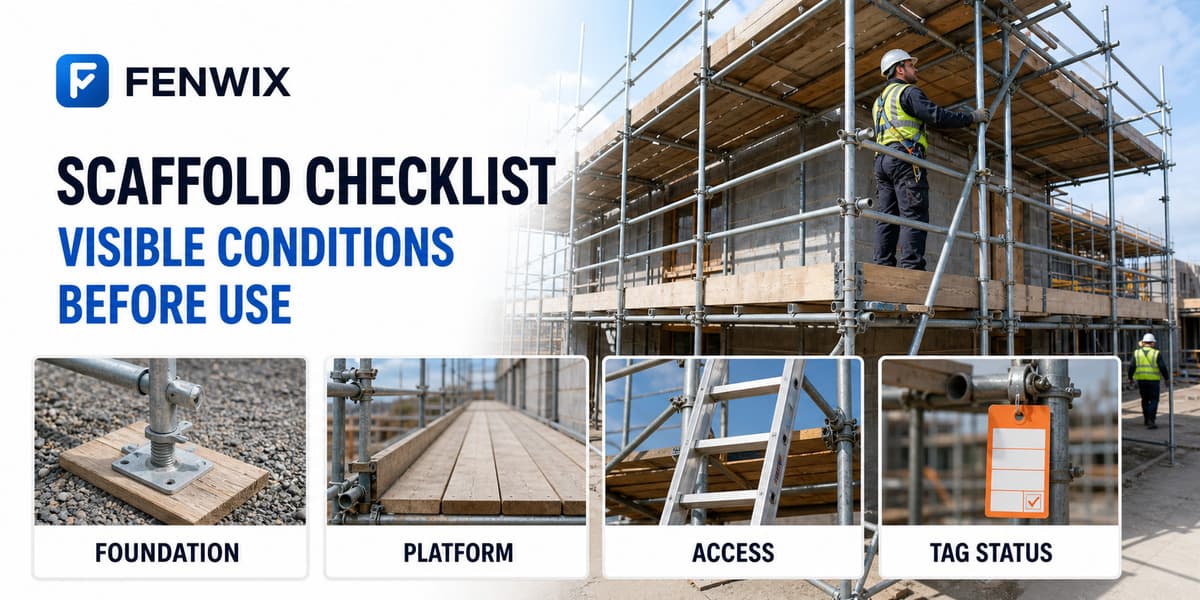
CURRENTUse this scaffold checklist to structure a visual field review of foundations, structural members, ties, platforms, edge protection, access, loading and environmental change. It is not an engineering approval or statutory inspection certificate; a competent person must apply the scaffold design and local requirements.
Follow a consistent sequence so visible base, structural and access defects are not skipped.
Alteration, weather, impact and adjacent work can invalidate an earlier acceptable condition.
Identify the lift, bay, elevation or access point in every finding.
Confirm which scaffold is in scope, its intended use and whether design or handover information is required. Prevent access when the condition cannot be safely inspected.
Photograph the full bay before the detail, name the exact level and member, and state whether access was restricted. A close-up without position can be impossible to act on.
Apply the design, manufacturer instructions and competent-person requirements for the actual scaffold. These prompts do not authorize use.
Is the scaffold clearly identified, and does the displayed status match the current inspection and access condition?
Is the supporting ground visibly stable, drained and free from undermining, settlement or unplanned excavation?
Are base plates, sole boards, wheels or adjustable bases present, seated and not visibly overloaded or improvised?
Are main members present, aligned and free from obvious deformation, severe corrosion or incompatible substitution?
Are required braces, ties and anchors present, secure and not removed for access or façade work?
Are working platforms fully decked for the design, stable, free from dangerous gaps and clear enough for safe work?
Are guardrails, intermediate protection and toe boards present where required and free from obvious damage?
Are ladders, stair towers, gates and landings secured, unobstructed and arranged to avoid climbing on braces?
Are materials distributed within the intended load class, with no obvious overloading, impact risk or blocked access?
Where applicable, are wheels, brakes, outriggers, height limits and movement conditions controlled before use?
Are power lines, vehicles, cranes, openings, falling objects, weather and public access controlled around the scaffold?
Is there any removed board, guardrail, tie, brace or component, or evidence that users have altered the scaffold?
A routine user check and a formal inspection are not the same. Formal decisions must be made by a person competent for the scaffold and applicable rules.
Use the required schedule and also respond to alteration, impact, severe weather, ground change or any event that could affect stability.
No. A tag can be outdated, misplaced or inconsistent with a later change. Confirm the current physical condition and supporting record.
Yes. Each checklist result can carry notes, evidence and follow-up in the current local workflow.
Inspect in a fixed sequence, record the precise bay or lift and require competent correction and reinspection before restoring access.
Use this checklist in FenwixContent status: CURRENT · Last reviewed: 2026-08-16
Claim basis: Fenwix independently authored field checklist content · Fenwix current application flow · Fenwix editorial accuracy standard