Observe without exposure
Do not remove covers or approach live parts beyond the limits of your competence and procedure.
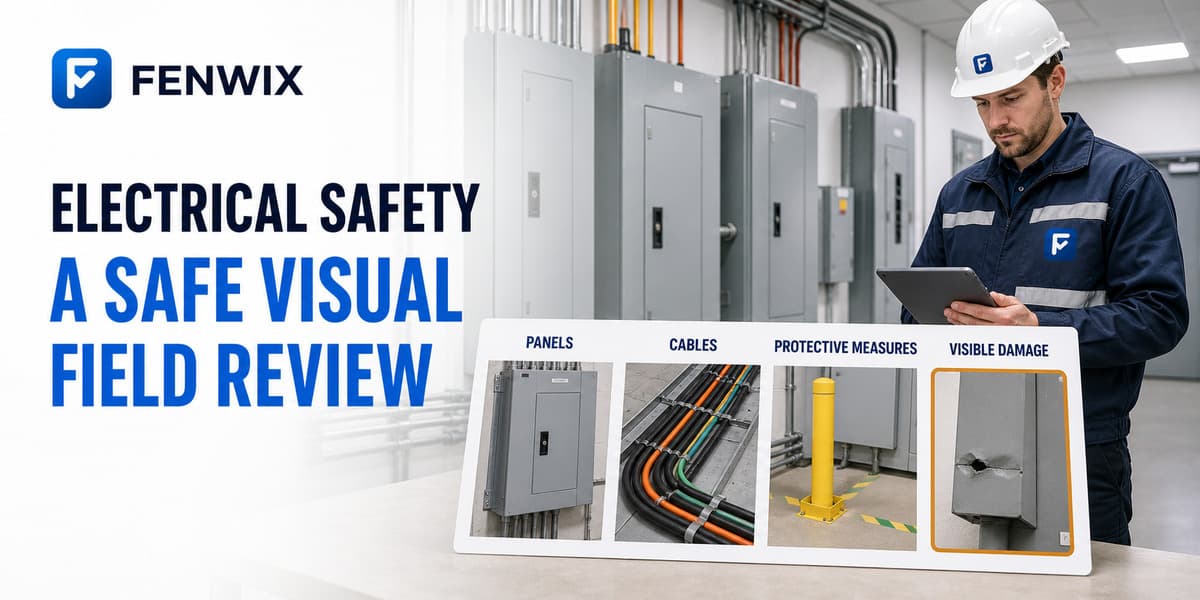
Practical checklist
CURRENTUse this electrical safety checklist to identify visible workplace hazards involving enclosures, panels, cables, plugs, temporary distribution, wet areas, access and signs of heat or damage. It is a field-observation aid, not electrical testing, certification or authorization to open live equipment.
Do not remove covers or approach live parts beyond the limits of your competence and procedure.
Record panel, circuit, asset and exact location so a competent person can act.
Heat, smell, arcing, exposed conductors and water contact require prompt control.
A workplace walk can reveal damage, misuse and access problems. Isolation, testing, cover removal and technical conclusions belong to appropriately authorized and competent people using suitable equipment.
Capture the asset or panel identifier, full installation context and defect detail without exposing yourself. Describe observable facts such as cracked enclosure, discoloration or cable across wet ground rather than diagnosing an unverified cause.
These questions are for safe visual review. Technical inspection and testing must follow applicable rules and competent-person procedures.
Are covers, doors, blanks and fasteners in place, closed and free from obvious cracks, holes, corrosion or impact damage?
Is there any visible exposed conductor, missing barrier or accessible energized component requiring immediate isolation or restriction?
Are panels, isolators and emergency cut-offs identified, reachable and free from stored material or blocked approach?
Are cables free from cuts, crushing, taped repairs, strained entries, sharp-edge contact and trip or vehicle damage?
Are plugs, sockets and adapters intact, correctly seated and free from looseness, scorching, overload or improvised connection?
Are temporary boards and leads suitable for the environment, protected from damage and arranged without uncontrolled daisy-chaining?
Is electrical equipment suitable and protected for water, dust, chemicals, heat, vibration and outdoor exposure present at the location?
Where required, are protective devices and inspection or test status identified, current and supported by the appropriate record?
Are visible protective conductors, bonds and connections present and free from obvious damage, without treating appearance as a test result?
Is there discoloration, melting, unusual heat, burning smell, arcing sound or repeated tripping that requires immediate escalation?
Are isolators identifiable and lockout arrangements available and used according to the task procedure?
Is there improvised wiring, defeated protection, open junction work or alteration without a clear responsible record?
Not on the basis of this checklist. Cover removal and electrical work require the site's authorization, competence and safe system of work.
No. Visual condition and electrical test results are different evidence.
Control exposure promptly and escalate to an authorized competent person under the site's electrical-safety procedure.
Yes. Completion evidence can be attached to a finding and verified separately before closure.
Record visible facts without increasing exposure, control urgent hazards and require competent assessment before returning defective equipment to service.
Use this checklist in FenwixContent status: CURRENT · Last reviewed: 2026-08-16
Claim basis: Fenwix independently authored field checklist content · Fenwix current application flow · Fenwix editorial accuracy standard